Having community support to hold each other accountable is a massive barrier for many people struggling with addiction. The term codependency was coined in addiction recovery research — not in the way its often colloquially used, though. People dependent on substances very likely have someone that is codependent around them enabling that addiction. Some programs like SMART Recovery specifically host separate meetings for family and friends of people seeking treatment to break down those dynamics.
For some, AA is the only option out there, but I do suggest people looking for secular options to check out SMART Recovery. They have workbooks and a mobile app that include evidence based skills, but if someone’s in need of an in-person community and doesn’t have any alternatives around them, I think it’s reasonable to support them in going to AA, if only to check it out and see what the particular groups are like. Another commenter in this thread (BanMe) shared their experience in finding a group that was filled with atheists, so, they’re not all submitting to Jesus
Also want to throw out there for anyone curious about specific skills, DBT also has quite a few centered around distress tolerance, mindfulness and emotional regulation. They’re helpful in quite a few areas outside of addiction, but DBT is considered like gold standard treatment for people with chronic suicidality. It’s not effective for everyone, though. There’s no one model that will work for everyone. Treatment for mental health, substance abuse included, is highly individualized and has many factors in how each model might be effective or not.


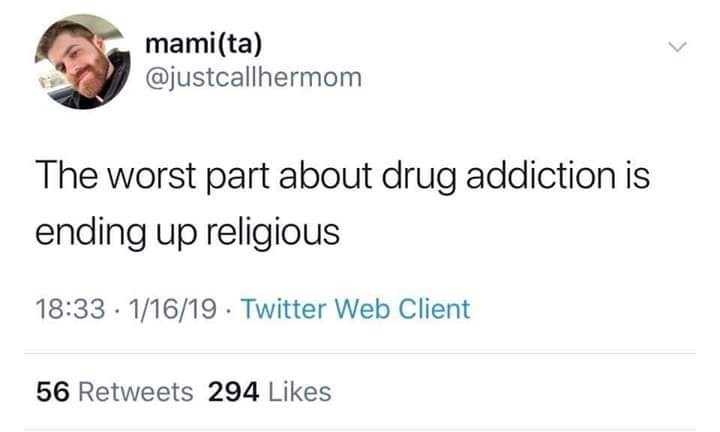
Having community support to hold each other accountable is a massive barrier for many people struggling with addiction. The term codependency was coined in addiction recovery research — not in the way its often colloquially used, though. People dependent on substances very likely have someone that is codependent around them enabling that addiction. Some programs like SMART Recovery specifically host separate meetings for family and friends of people seeking treatment to break down those dynamics.
For some, AA is the only option out there, but I do suggest people looking for secular options to check out SMART Recovery. They have workbooks and a mobile app that include evidence based skills, but if someone’s in need of an in-person community and doesn’t have any alternatives around them, I think it’s reasonable to support them in going to AA, if only to check it out and see what the particular groups are like. Another commenter in this thread (BanMe) shared their experience in finding a group that was filled with atheists, so, they’re not all submitting to Jesus
Also want to throw out there for anyone curious about specific skills, DBT also has quite a few centered around distress tolerance, mindfulness and emotional regulation. They’re helpful in quite a few areas outside of addiction, but DBT is considered like gold standard treatment for people with chronic suicidality. It’s not effective for everyone, though. There’s no one model that will work for everyone. Treatment for mental health, substance abuse included, is highly individualized and has many factors in how each model might be effective or not.