

16·
15 days agoThe drawback to spaces is that people with vision issues or dyslexia lose the ability to make the code more readable in their IDE by adjusting tab size.
I’m just a person who does mycology for fun
The drawback to spaces is that people with vision issues or dyslexia lose the ability to make the code more readable in their IDE by adjusting tab size.
I can practically hear Cecil reading this in an overly cheerful tone on an episode of Welcome to Nightvale.
Boiling and changing the water removes the psychoactive compounds as well as the ones that keep you on the toilet all day if you’ve done it correctly (both are water-soluble). At that point it’s just a culinary mushroom.
People who are “detoxifying” it to use as a drug bake it at a low temperature which does a poor job of removing any of the toxic or psychoactive compounds so they get a bad high and end up on the toilet half a day (seriously, just order some cube spores or something if IDing good actives is too hard).
There are edible mushrooms which are really hard to ID, but you just don’t try to eat those.
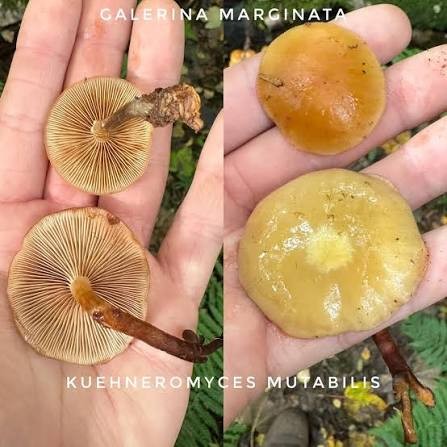
Most people don’t go after the tasty Sheathed woodtuft (Kuhernomyces mutablis) because the risk of confusing it with the deadly funeral bell (Galerina marginata)
I’ve occasionally seen some false chanterelles (Hygrophoropsis sp.) do a pretty good chanterelle impression but they’re not toxic, just bland and not well-tolerated.
I’ve heard some people use them as cocktail bitters.
This is very much not the case with mushrooms, most people who’ve accidentally eaten a deathcap (Amanita phalloides) have reported that they’re delicious. Fly agaric (Amanita muscaria) which can be detoxified by boiling it and changing the water multiple times, is pretty darn good. I think it’s better than the average grisette (the non-toxic Amanita sect. vaginatae spp.).
Ok the other other hand, the destroying angel (Amanita ocreata) is said to taste pretty bad.
For a non-amanita example, I’ve spit-tested the toxic Agaricus deardorffensis and I thought it tasted pretty good. That one is an odd case though since some people are unaffected by its poison and it’s possible that’s correlated with not being able to detect the unpleasant sharpie-like odor it’s said to have, but I wasn’t willing to give myself the shits for science so it remains a mystery.
Fair use requires you to analyze or comment on the work or transform the original work in some way, non-commercial use isn’t enough on its own.
The real reason it’s “ok” is that it’s unlikely the owner would be able to prove damages from someone using their image as an avatar so it’s not worth taking anyone to court over it because all they would get is the judge ordering them to stop and a C&D is cheaper if the owner really cares about stopping you.

Mycology is full of them which are mostly the result of genetic sequencing and the good old “where do you draw the line between species” question but a recent and high visibility one is the Collybia shift.
Before genetic testing, Collybia was a genus characterized by smallish pale-spored mushrooms with convex caps, no ring, and gills which are broadly attached to the stem (the simplest shape the average person would imagine for a mushroom), this became one of the classic “statures” of mushrooms “Collybioid”. As we sequenced Collybia species, they were slowly moved into other Collybioid genera like Collybiopsis and Gymnopus. Eventually this resulted in most of the Collybioid mushrooms being moved out of Collybia, leaving only the earliest-discovered mushrooms in the genus which were tiny parasitic mushrooms that weren’t really Collybioid at all.
Here’s an average “Collybioid” mushroom Gymnopus sp.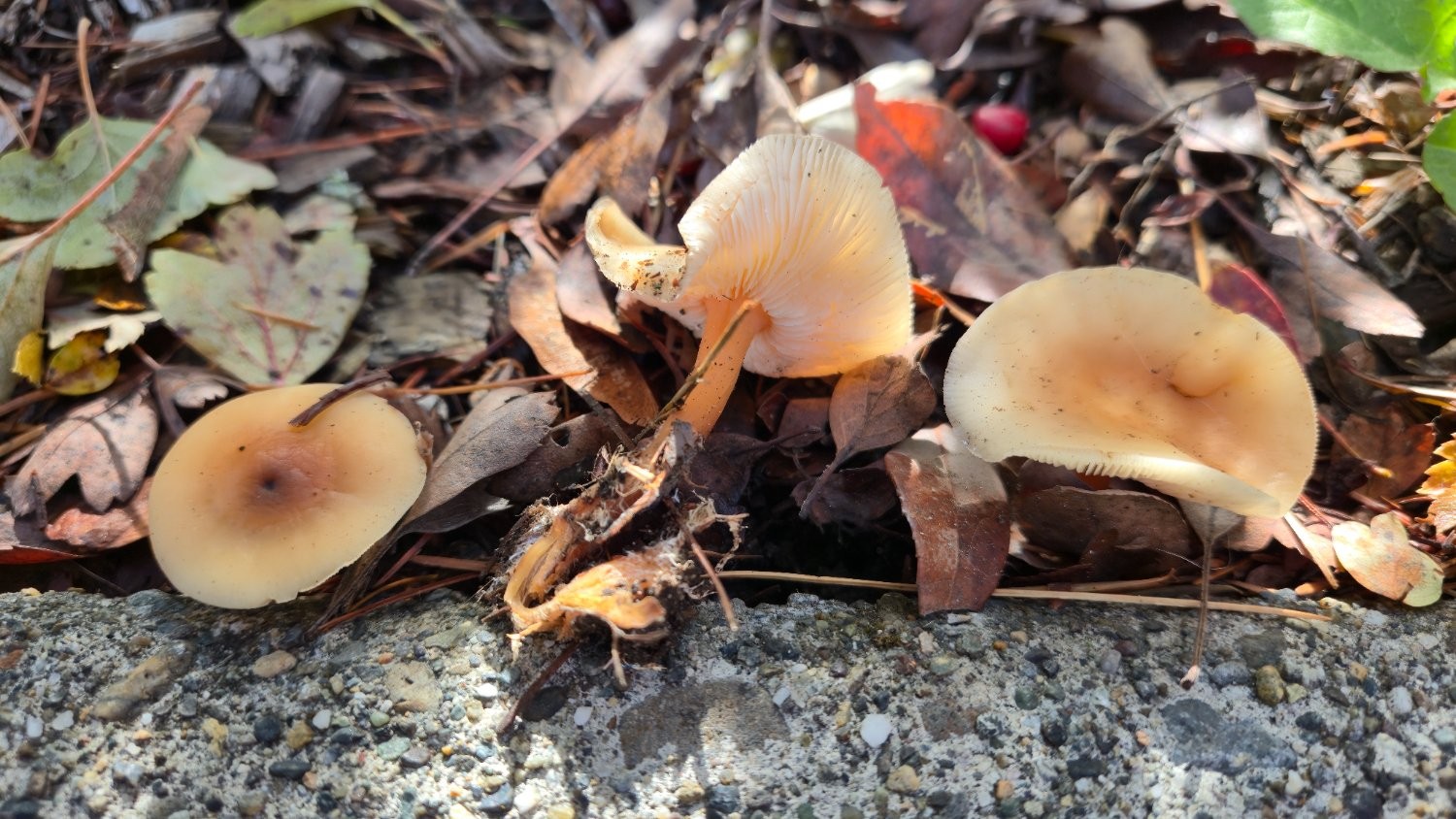
Then things got worse, a recent paper did a study on genus Clitocybe which is another genus which has a classic stature named after it, “Clitocyboid” which refers to smallish pale-spored, funnel-shaped, mushrooms with gills that run down the stem. This paper discovered that nearly everything we had been calling “Clitocybe” actually belonged in Collybia meaning that most mushrooms in Collybia are now Clitocyboid instead of Collybioid. This has resulted utter chaos which has some mycologists considering invoking the “common usage” rules in taxonomy to put the new Collybias back into Clitocybe to make things less confusing. This chaos has been compounded by the fact that iNaturalist has already accepted this name change, but only for the mushrooms explicitly studied in the paper and not their known relatives which has resulted in the Blewits being split between Collybia and Lepista (which itself was a recent name change from Clitocybe that everyone was still adjusting too).
Average nondescript Clitocyboid (no ID because these are nearly impossible):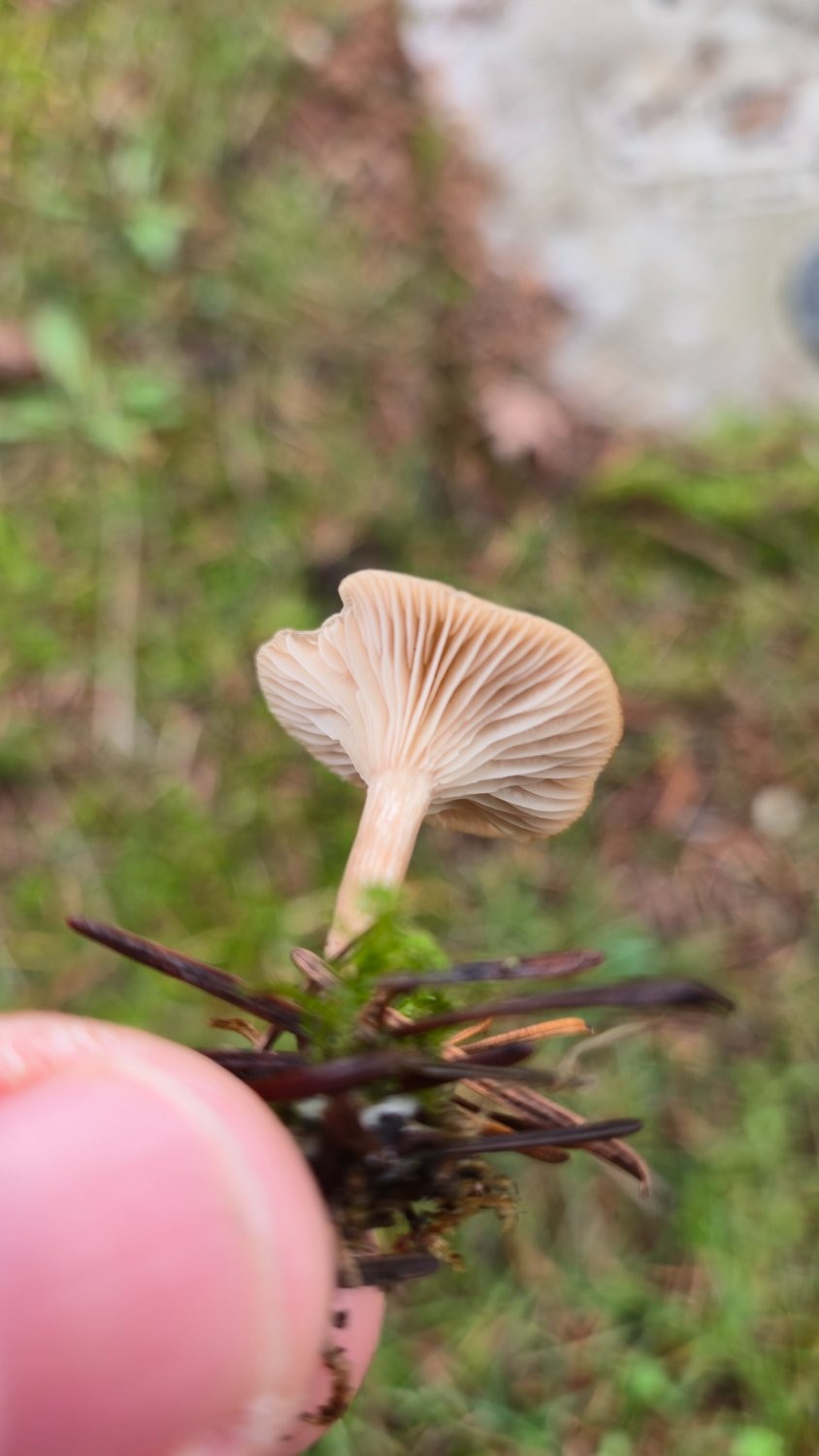
A Blewit, AKA Clitocybe/Lepista/Collybia nuda: