

8·
8 小时前Same, and it’s worth keeping in mind that back in 2008, China basically bailed the US out. They were by far the biggest buyer of US bonds then which helped stabilize the economy. There’s a fat chance of that happening this time around.

Same, and it’s worth keeping in mind that back in 2008, China basically bailed the US out. They were by far the biggest buyer of US bonds then which helped stabilize the economy. There’s a fat chance of that happening this time around.
The part they conveniently forget to mention is that Black Friday sales are fueled by people maxing out their credit card debt. I get the impression that people are reaching a point of fatalism where they now realize they’re never paying their cards off and it’s just yolo from here on out.
The funny part is that we already saw many examples of data fudging happening under Biden, it’s just become far more blatant under Trump.
I mean retrenchment and focus on dominating Latin America is certainly a likely outcome. I’m just saying it won’t help the US with their high tech supply chain problems.
I don’t see how Venezuela helps here. It’s not the mining of rare earths that’s the really hard part, but the refining tech that China has an effective monopoly on. Replicating that will be a decades long project.
I expect that China will prioritize domestic use, because why wouldn’t they. And if that’s going to be the case then it’s no longer a question of politics, the economics are going to be the deciding factor here. Chinese businesses are going to need rare earths as inputs, and there won’t be enough left to export. It’s really that simple in my opinion. Even if CPC wanted to help the US out for some reason, it would be politically impossible for them to say we’re going to starve our own industries to feed the US.
I agree it’s unlikely that this particular problem will surface in the next couple of years. I expect the big problems will start closer to 2030 when we start seeing serious supply shortages and the current crop of chips starts burning out. But a lot of other things can happen before then as well. The US economy is clearly in a very fragile state right now, and there could be any number of black swan events before this particular bottleneck is hit.
You’re right, if the proposed data centers end up using closed loop cooling then water might not be an issue there. It could be a serious effort happening in the US, but I still don’t see how the rare earth problem is going to be addressed. Exports from China are going to be drying up because China is increasingly using them for domestic production, and domestic demand will only accelerate as China expands production of advanced chips, solar panels, EVs, robots, and so on. Given that current chips will burn out right around when we expect to see a rare earth supply bottleneck in 2030s, where are the materials for new chip production going to come from?
that’s right, mind over matter :)
This is where we disagree. You’re assuming that big tech will make meaningful investments and actually produce things. I think they’re just pumping up their stock and nothing of value will actually be produced. The fact that the proposed data centres will supposedly be built in places like Texas and Arizona where there’s water scarcity kinds of highlights that none of these plans are serious. Efficiency and water usage may be going down, but that’s more than made up for by the sheer scale of proposed rollouts.
Meanwhile, the shortages are absolutely here already as evidenced by the current crisis over yttrium supply. China’s export restrictions have effectively halted shipments to the US, and caused European prices to skyrocket by over 4,000%. The lack of supply is creating severe shortages for aerospace and semiconductor manufacturing today.
Market analysts forecast significant supply deficits by 2030, while China is projected to retain 78% of global refining capacity even as far as 2040 under the most aggressive diversification scenarios.
And given that these GPUs have a duty-cycle that’s just two to three years, and as low as 54 days when they are run hard, that gives us a clue to the scale of the shortages we can expect. The current crop of chips will be nearing the end of their life cycle just as the rare earth shortage is about to hit the hardest.
Very much reminds me on how the US is approaching the war in Ukraine. Seems like denial of reality is a consistent position of the deep state.
despite the best efforts of the regime
@freagle@lemmygrad.ml pertinent to a discussion we had earlier
it’s absolutely hilarious how Trump admin is trying to set up the US as some neutral third party here
China is ahead by pretty much every metric that matters. They publish vastly more papers, they dominate in terms of open models, including within silicon valley itself, and they’ve actually found practical applications for this tech because they have massive industrial niche they can apply it to.
Another interesting point that I haven’t mentioned much is that China being cut off from latest chips turned out to be a blessing in disguise. Chinese companies were forced to find software workarounds for training and running the models on slower hardware, but that resulted in the models becoming ever more efficient. Now China has practical AI that doesn’t need huge server farms to run, and that can be used anywhere in the world. Meanwhile, the top end proprietary models from the US might be a bit ahead in terms of peak performance, but they’re far less efficient, and you can only use them through subscriptions to US companies. Which also means you have to give up your data.
I think it’s pretty obvious that Chinese tech will become the world standard at this point.
My read on the whole thing is that Kellogg, Europeans, and Ukrainians convinced Trump that everything was going great after Alaska talks. So, Trump backed out of the peace settlement he himself proposed based on that. Now that everybody can see the front is collapsing, Trump is scrambling to cobble together some semblance of a deal.




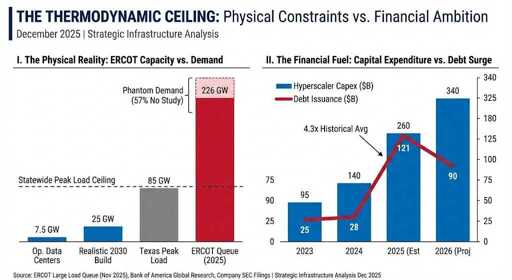










Yup, I think that’s exactly what’s happening. The AI sector is seen as safe right now, and people have anxiety about the state of the economy as a whole, so they’re rushing to what they perceive to be the safe thing.